 AutoClip
AutoClip 1.5 first-run case: an original lesson becomes three Shorts
View original source · Original lesson with synthetic narration. Reuse to introduce AutoClip with source attribution.
AutoClip 1.5.0 produced three portrait Shorts, covers and export kits from a 2-minute-7-second original lesson with a matching SRT. This case records the input conditions, production-stage timing and manual review findings for reproduction.
Input and run conditions
AutoClip authored this lesson for the workflow test: graphics without people, a synthetic English voice and a matching SRT. The official 1.5.0 CLI wheel from GitHub Releases ran produce for YouTube Shorts. The analysis configuration used qwen-plus; cloud transcription and AI image generation were disabled. Video editing and rendering ran locally.
Outputs and measured timing
Production start to completion took about 62.4 seconds and produced three clips of approximately 44.3, 23.1 and 22.1 seconds. This excludes source creation, installation, first model downloads, queueing before production starts, manual review and publishing. A two-minute lesson with supplied captions does not predict two-hour podcast performance. Cloud model charges were not independently measured.
What the export kits contain
Each output includes a portrait video, designed cover, title, description, tags and export kit. The player above shows the first output; the case library has the other two. The cover and video come from the actual run. This graphics-based source does not test face tracking or multi-speaker framing.
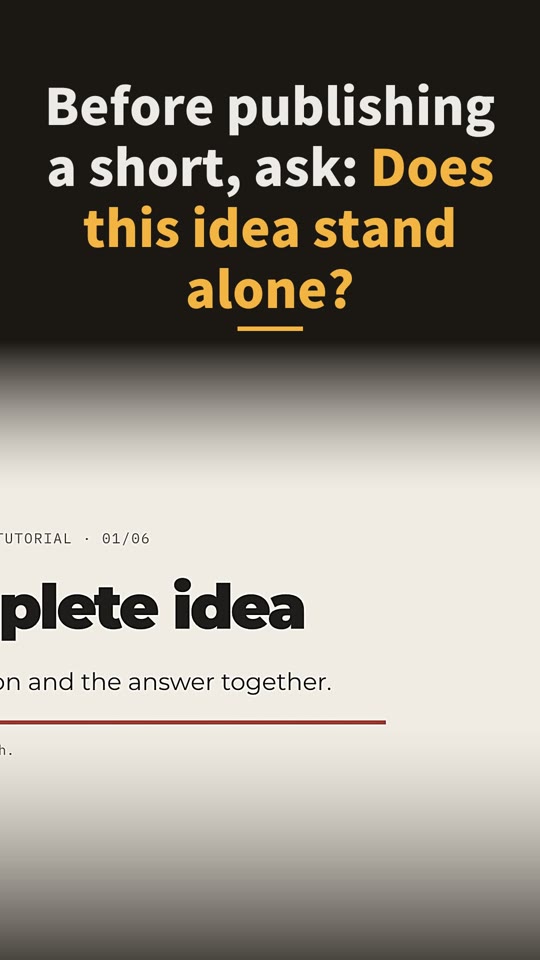
Automatic output still needs review
Review found a description ending mid-sentence in output one, and “From .” plus a shortened tag in output three. Completed rendering does not mean ready to publish. Watch each full clip, check captions and context, then review the cover, title and description before posting. This case preserves the automatic output to show its practical limits.
Reproduce a first successful run
Download the original source and matching SRT below, follow the first-clips guide, configure your own analysis model and choose one destination. The run receipt records the release, timestamps and output count. You may reuse this original source and workflow film to introduce AutoClip with source attribution. Historical interview cases retain their separate creator-rights notices.